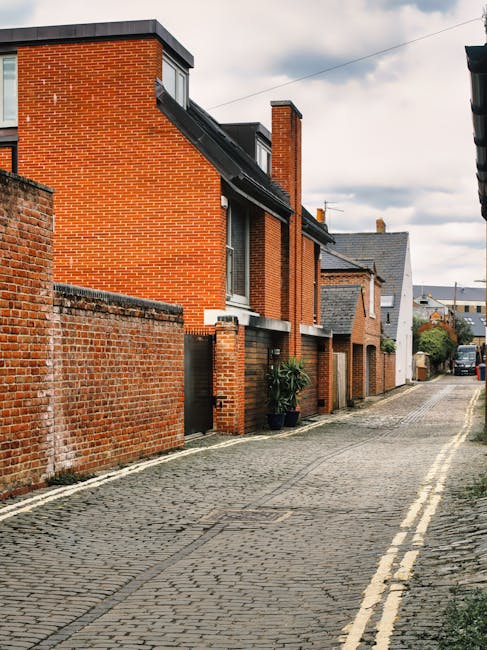
Common problems with driveway access for Kingston removals
If you are planning a move in Kingston, driveway access can make the difference between a calm, efficient moving day and a rather stressful one. Common problems with driveway access for Kingston removals often show up at the exact moment you need space, timing, and a clear route for the van. A narrow entrance, low wall, parked cars, awkward turning space, or a shared driveway can slow everything down. Sometimes it is just a small detail that becomes a big headache at 8:00 in the morning when the kettle is already packed.
This guide explains the most common access issues, why they matter, and what to do about them before moving day. You will also find practical steps, a checklist, and a realistic example from the kind of situations movers run into all the time. If you want to explore the wider service options around your move, it can also help to look at removals, home moves, and packing and boxes for planning support.
Table of Contents
- Why driveway access matters for Kingston removals
- How driveway access affects the moving process
- Key benefits of sorting access early
- Who this is for and when it makes sense
- Step-by-step guidance for smoother access
- Expert tips for better results
- Common mistakes to avoid
- Tools, resources and recommendations
- Law, compliance, standards and best practice
- Options, methods and comparison table
- Case study or real-world example
- Practical checklist
- Conclusion
- Frequently asked questions
Why driveway access matters for Kingston removals
Driveway access matters because removal work is physical, time-sensitive, and often built around one simple assumption: the van can get close enough to the property. The closer the vehicle can park to the front door, the fewer trips the crew has to make, and the less chance there is of damage, delays, or frustrated neighbours peering out from behind the curtains. That part is basic, but it changes the whole day.
In Kingston, access can be especially important where houses sit on busy residential roads, where drives are shared between multiple properties, or where parking is already tight. Even a driveway that looks generous from the street may turn out to be awkward once the van is actually there. A slope, low gate post, angled entrance, or tree branch hanging just a bit too low can all make a straightforward move feel strangely complicated.
The impact is not just inconvenience. Poor access can increase handling time, raise the chance of knocks on walls or furniture, and make it harder to move bulky items such as wardrobes, mattresses, or white goods safely. If you are moving from a larger property, or arranging house removals with several heavy pieces, access becomes one of the first things worth checking, not the last.
There is also the human side. Nobody enjoys hovering in the doorway while a crew tries to work around a parked car or a neighbour's delivery van. When the route is clear, everyone relaxes a little. When it is not, the whole move can feel like it is running uphill. Sometimes literally.
How driveway access affects the moving process
Removal teams usually plan the loading sequence around the property layout. If the vehicle can park close to the entrance, items can be moved in a clean line from the house to the van. If access is restricted, the team has to adapt: longer carry distances, extra care on steps or uneven paving, and possibly a different vehicle size altogether. That sounds simple enough, but every extra metre adds time and effort.
Here is the practical chain reaction. First, limited access slows loading. Then the schedule stretches. Then the risk of congestion rises if the road is narrow or public parking is limited. By the time you have a delay on one end and a traffic issue on the other, the move can feel more difficult than it really should be. A lot of this can be avoided with early planning.
Many people assume any removal van can just "manage somehow". Sometimes yes, but not always. A larger vehicle may need more turning room than expected, while a smaller vehicle may require multiple trips. That is why services such as man and van or man with van are often considered when access is tight, especially for flats, smaller homes, or straightforward single-trip jobs.
Driveway access also affects safety. A smooth route reduces lifting strain, lowers the chance of dropped items, and makes it easier to protect both property and contents. In plain English: if the van is parked where it should be, everybody has a much easier morning.
Key benefits and practical advantages
Sorting access issues early has a few very real benefits. Some are obvious, some less so. But all of them matter on moving day.
- Faster loading and unloading: Less walking back and forth means less time spent moving the same box twice.
- Lower damage risk: Shorter carry distances usually mean fewer scrapes on walls, floors, and door frames.
- Better crew efficiency: Movers can focus on safe handling instead of improvising around obstacles.
- More accurate quoting: If access details are clear, estimates are usually more realistic.
- Less stress on the day: You are less likely to be juggling parking problems and logistics at the same time.
There is another benefit that people often overlook: better access can help protect your relationships with neighbours. If a van blocks the path, leans too close to a driveway, or causes repeated shuffling of cars, tensions rise quickly. A bit of planning can spare everyone that awkward half-smile in the driveway. You know the one.
For larger or more complex moves, particularly where access affects timing, it may be sensible to consider removal services rather than trying to treat the job like a simple grab-and-go job. The right setup depends on the property, the load, and the route to the vehicle.
Who this is for and when it makes sense
This topic matters to almost anyone moving from a Kingston property with limited outdoor space, but it is especially relevant in a few situations.
- Homeowners with narrow or shared driveways
- People living on busy roads with little kerb space
- Flat movers dealing with rear access, alleyways, or tight courtyards
- Families moving large furniture or heavier appliances
- Students with multiple small loads but awkward access
- Office teams relocating from buildings with restricted loading space
If you are moving from a top-floor flat, access can be even trickier because the road layout matters as much as the stairwell. For that kind of move, flat removals are often planned differently from house moves, with more emphasis on timing, parking, and the shortest sensible walking route.
It also makes sense to think about access if you are hiring a smaller vehicle for flexibility. A removal van may fit where a larger lorry would not, but the trade-off is usually capacity. That is not a bad thing. It just needs to be the right match for the job.
Step-by-step guidance for smoother access
Here is a practical way to deal with driveway access before moving day. Nothing fancy. Just the kind of prep that saves time and avoids the "oh no" moment when the van arrives.
- Measure the driveway and entrance. Check width, turning space, gate clearance, slope, and any low overhead obstacles.
- Look at the route from house to vehicle. Note steps, gravel, narrow paths, slippery paving, or places where two people cannot pass comfortably.
- Check parking realistically. Don't assume the van can sit directly outside. Think about local parking conditions and whether another vehicle might be in the way.
- Tell the removals team early. Share the access details while booking, not on the morning of the move when everyone is already in motion.
- Clear the driveway and front approach. Move bins, bikes, garden furniture, and anything else that narrows the route.
- Plan for bulky items separately. Sofas, wardrobes, pianos, and American-style fridge freezers may need a different approach.
- Have a backup plan. If the driveway cannot be used, decide in advance where the vehicle can park instead.
If your move is time-critical, you may also want to look at same day removals, but only if the access problem is genuinely manageable. Fast does not help much if the van physically cannot get in.
A small note from experience: the most useful access detail is often the one people think is too minor to mention. That low branch, the narrow squeeze past the hedge, the shared gate that sticks in damp weather. Mention it. Honestly, it helps.
Expert tips for better results
Good access planning is mostly about thinking like the person carrying the heavy box. If you have ever tried to turn a sofa through a narrow gate, you will know it is rarely as simple as "it looked fine on the phone".
Be specific when describing access
Instead of saying "there is a driveway", explain whether it is steep, shared, blocked by another vehicle at certain times, or too narrow for turning. If the vehicle needs to reverse in or out, say so. Reversing on a tight residential street is not a detail; it is a decision point.
Choose the right vehicle size
A smaller vehicle can be the smarter choice if the road is tight, the gate is narrow, or the turning circle is poor. In some cases, a larger moving truck is still the best option, but only when access allows it. Bigger is not automatically better. That is one of those moving-day truths nobody learns in a brochure.
Protect the surfaces you walk over
Wet gravel, loose slabs, and muddy borders are more than just annoying. They can make carrying items harder and more dangerous. If possible, lay down temporary protection or choose the driest route available. In Kingston, a rainy morning can change a neat driveway into something a bit slippery very quickly.
Keep the driveway free for the window you need
If the van only has a short stop outside your property, make sure the route is ready before it arrives. Have boxes grouped near the exit, identify which furniture goes first, and keep keys and parking permissions to hand. Waiting around while someone hunts for the front-door key is, frankly, one of the classic moving-day delays.
Common mistakes to avoid
Most driveway access problems are not dramatic. They are just small oversights that add up. The good news is that they are avoidable.
- Assuming access is "fine" without checking it properly. A quick glance is not enough.
- Forgetting about other vehicles. Your own car, a neighbour's car, or a visiting contractor can block the best space.
- Not mentioning steep gradients. A sloped drive changes how items need to be carried and positioned.
- Ignoring width at the narrowest point. Gates and hedges often matter more than the open part of the drive.
- Leaving bulky items until the end. The hardest objects should be planned first, not discovered halfway through the job.
- Booking a vehicle that is too large for the site. That can create more problems than it solves.
There is also a surprisingly common mistake: people only think about the driveway, not the drop-off point at the new property. If both ends are awkward, the move becomes twice as fiddly. That is when a proper plan starts looking very wise indeed.
Tools, resources and recommendations
You do not need specialist equipment for every move, but a few simple tools and bits of preparation can make access problems much easier to handle.
- Measuring tape: Useful for checking gate widths, driveway width, and space around parked vehicles.
- Phone camera: Photos of the access route help explain the situation clearly when booking.
- Sticky notes or labels: These help keep heavy or awkward items identified for quicker loading.
- Protective floor coverings: Handy if the route passes through clean indoor areas or polished flooring.
- Parking plan: A simple written note of where the vehicle can stop, reverse, or wait.
For moves where access is difficult but the load is not huge, some people find it useful to compare options such as man with a van and a more traditional full-team removal. For larger or more delicate loads, especially if stairs and access issues stack up together, it may be worth considering piano removals or other specialist handling where appropriate.
And if you are trying to decide whether to store items temporarily because access is not quite ready, storage can be a practical bridge. Not glamorous, but useful. Very useful, actually.
Law, compliance, standards and best practice
For most residential moves, driveway access is less about a single law and more about sensible compliance, safety, and courtesy. That said, moving teams still need to work in line with UK health and safety expectations, and they must take reasonable care when handling property, vehicles, and access routes.
In practical terms, best practice usually means:
- Planning parking and loading safely, rather than making last-minute assumptions
- Avoiding obstruction where possible
- Taking care around pedestrians, neighbours, and other road users
- Using suitable lifting methods and equipment for the item being moved
- Being clear about any known site hazards before the team arrives
If you are moving from a block, shared driveway, or commercial site, there may also be site-specific rules from landlords, management companies, or building operators. Those are not something to guess at. It is better to check early and avoid a hold-up later. If you want to understand the company's own approach to safe working, the health and safety policy and insurance and safety information are useful places to start.
For business relocations, access planning can be even more structured, especially if loading bays, lifts, or shared entrances are involved. In that setting, commercial moves often require more coordination than a simple house move.
Options, methods and comparison table
Not every access problem needs the same solution. Here is a practical comparison of common approaches.
| Approach | Best for | Strengths | Limitations |
|---|---|---|---|
| Full-size removal truck | Larger homes with decent access | Fewer trips, efficient for bigger loads | Needs more space to park and manoeuvre |
| Smaller removal van | Narrow roads, tighter drives, smaller loads | Easier to position, more flexible access | May need extra trips for larger moves |
| Man and van service | Light to medium moves, quick collections | Simple setup, often more adaptable | Not always ideal for very large or complex loads |
| Storage plus staged move | When access or timing is not ready | Reduces pressure, gives you breathing room | Requires an extra step and careful coordination |
For many people, the best answer is a compromise. Not the biggest vehicle possible, not the smallest possible either. Just the one that fits the site, the load, and your nerves on the day. Sounds obvious, but it is amazing how often people only arrive at that conclusion after one awkward attempt.
Case study or real-world example
Consider a typical Kingston terrace property with a shared driveway and a narrow entrance beside a brick wall. The family is moving out in the morning, and they have a sofa, a dining table, several heavy boxes, and a couple of awkward garden items. On paper, everything sounds manageable.
Then the van arrives.
There is a car parked in part of the driveway, the gate opens a little less than expected, and the turning point at the end of the drive is tighter than the family thought. If the team had simply tried to push ahead, the day would probably have become slower and more stressful. Instead, the access was discussed in advance, the vehicle was positioned slightly further out, and the loading order was adjusted so the largest items came out first while the route was still clear.
The result was not magic. It was just planning. A couple of extra minutes on the front end saved a lot of faffing about later. Truth be told, that is usually how good moves work.
Practical checklist
Use this checklist before moving day if you are worried about driveway access. It is simple, but it covers the things people most often forget.
- Measure the driveway width and gate opening
- Check for low branches, posts, walls, or tight corners
- Confirm whether the driveway is shared
- Look at parking restrictions near the property
- Move personal cars away from the loading area
- Tell the removals team about any steep slopes or uneven surfaces
- Identify the biggest or heaviest items in advance
- Decide where the vehicle should stop if the driveway is blocked
- Keep the front path clear of bins, bikes, and garden clutter
- Have keys, labels, and essential paperwork ready before arrival
If your move involves a lot of packing, the team or your own schedule may also benefit from packing and unpacking services to reduce the number of loose items waiting around the entrance.
Conclusion
Common problems with driveway access for Kingston removals usually come down to the same few issues: tight entrances, poor parking, awkward turning space, and access details that were never checked properly. None of these are rare. None of them are impossible. But they do need attention early if you want the move to feel controlled rather than chaotic.
The best approach is straightforward: measure, photograph, explain, and plan. Once you do that, the whole day gets easier. The crew can work faster, your belongings are handled more safely, and you spend less time worrying about whether the van is in the right place. That peace of mind matters more than people realise.
Get a free quote today and see how much you can save.
And if the driveway feels like the one awkward part of an otherwise sensible move, don't let that put you off. A good plan can turn a tight access problem into just another detail on the list.
Frequently Asked Questions
What are the most common driveway access problems during a move?
The most common issues are narrow entrances, low gates or branches, steep drives, shared access, parked cars, and not enough room for the vehicle to turn or reverse safely.
How do I know if my driveway is too small for a removal van?
Measure the width at the narrowest point and compare it with the space needed for turning, opening doors, and loading. If the route feels tight for a normal car, it is probably worth flagging early.
Should I mention access issues when booking removals?
Yes, definitely. The earlier you mention them, the easier it is to choose the right vehicle and plan the move properly. Leaving it until the day itself usually creates avoidable stress.
Can movers work if the van cannot park on the driveway?
Usually yes, as long as there is a safe and legal alternative nearby. The team may have to carry items further, which can slow things down, but it is often manageable with proper planning.
What should I photograph before moving day?
Take photos of the driveway entrance, gate, turning space, steps, and any obstacles such as walls, poles, or overhanging branches. A few clear images can explain more than a long message.
Is a smaller vehicle better for tight access?
Sometimes it is. A smaller van may fit better on narrow roads or in tight driveways, but it may not carry everything in one trip. The right choice depends on access and load size together.
What happens if a neighbour parks across the drive?
That can create a delay, so it is wise to plan for it. If the driveway is shared or parking is tight, give yourself extra time and consider a backup loading point.
Do access problems make removals more expensive?
They can, depending on the amount of extra handling, the vehicle size needed, and the time involved. It is better to be honest about access upfront so any quote reflects the real job.
Are driveway access issues a bigger problem for flat removals?
They often can be, because flat moves may involve shared entrances, longer carry routes, or limited parking. That is why flat removals need careful access planning rather than guesswork.
What if I only have a small move but the access is awkward?
That is exactly the sort of move where a flexible setup can help. A smaller vehicle or a more adaptable service may be a better fit than a larger truck that cannot get close enough.
Do I need special permission to use a driveway for removals?
If it is your own driveway, usually not. But if the access is shared, managed by a landlord, or controlled by a building owner, it is sensible to check the rules first. Better safe than standing there looking at a locked gate.
What is the best thing to do if I am unsure about access?
Measure it, photograph it, and describe it in plain language before moving day. If you are still unsure, ask for guidance while arranging your move through the appropriate service page such as pricing and quotes or the main about us page for company details and support.
Can access problems be managed on the day?
Sometimes, yes. But it is always easier to handle them before the move begins. On-the-day fixes can work, though they usually cost more time and energy than early preparation.
What should I do if my driveway is clear but the road outside is busy?
Tell the movers in advance and plan the loading sequence carefully. Busy roads can be just as tricky as narrow driveways, especially if stopping time is limited.
If you are still weighing up the best move setup, you can also explore removal companies, removal van, and man and van options to match your access needs more closely.